
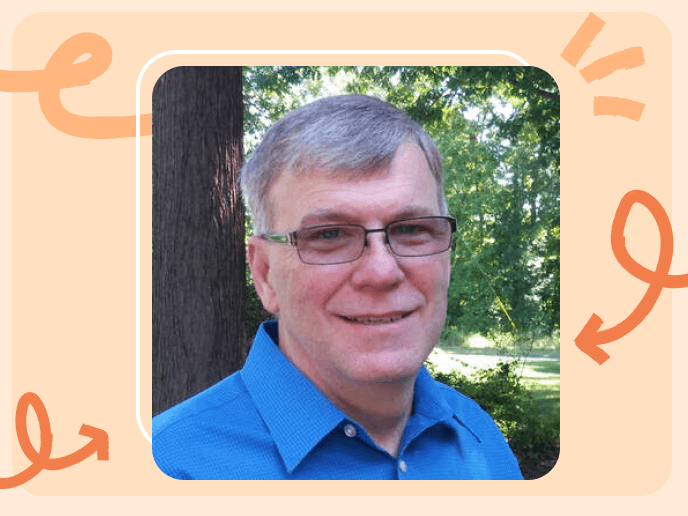
On November 5, 2024, Steve Kronmiller won the mayoral race in Scandia, Minnesota, by just 73 votes. In a town of about 4,000 people, the margin came down to neighbors making careful judgments about who they trusted most to lead.
“People knew my opponent, and they knew me,” Kronmiller said. “The vote count reflects that. That was the hardest part of it, really, with the small community.”
Kronmiller didn’t earn Scandia’s trust overnight. His success came after two decades of community leadership.
"I've been planning this for 20 years," he said. "I moved to the city, started attending meetings, figuring out who the players were, how things work, what the issues were."
His story is a reminder that the path to elected office doesn't always unfold in a single campaign season. Sometimes it looks like showing up, year after year, for your community.
Building Trust Before the Race Began
Kronmiller was no stranger to leadership when he announced his mayoral campaign. He first ran for office in the 1990s and has served on Scandia’s city council for the past eight years.
Long before his 2024 campaign, Kronmiller was building the kind of name recognition that no campaign advertising can buy: staying active in local Facebook groups and on Nextdoor, resolving disputes, and asking for community input.
He also waited for the right moment. Kronmiller said he chose to wait until the incumbent mayor, Christine Maefsky, stepped down before running for mayor.
“I really like what she does,” Kronmiller said. “I said, ‘You can be in office as long as you want. I'm not going to run until you decide you're going to step down.’ She did, and this was my time.”
Waiting for this strategic moment also meant higher stakes for Kronmiller.
"Two years ago, if I had run and lost, I'd still have been a council member in the middle of my term. This was all or nothing. And it turned out to be all."
A Low-Cost, Grassroots Campaign for Mayor
Scandia sits along the St. Croix River, about 25 miles northeast of Saint Paul. The city has deep roots as the site of what is believed to be Minnesota's first Swedish immigrant settlement. It's a community that has long prided itself on independence and self-governance.
Kronmiller’s campaign reflected that spirit of independence. He relied on low-cost, grassroots strategies and ran without ties to political parties.
Kronmiller spent just $675 on his campaign. His opponent spent over four times as much. In a world where even local campaigns can cost tens of thousands of dollars, Kronmiller’s low-budget campaign was a major grassroots win.
His campaign team was three people: himself, his wife, and his son, who came home from college with a 3D printer. The family printed small Dala horses, a symbol of Scandia’s Swedish heritage, with Kronmiller’s name to raise awareness.
“I handed those out at the parade, and I went to the Halloween party at the fire department and handed them out to all the kids, so parents going through the candy would find them,” Kronmiller said. “You need to see your name. It doesn't matter what they say in the paper about you as long as they spell your name right.”
This philosophy showed up in Kronmiller’s texting strategy as well. His campaign sent carefully timed text messages to voters, prominently featuring his name.
"[Even] if you didn't open the message, you still saw my name in order to delete it," he said.
Campaign texting and unlimited voter contact data come built into your GoodParty.org Pro campaign dashboard. Learn more about GoodParty.org Pro.
Another way Kronmiller’s team reduced campaign costs: his yard signs were the same 40 he'd campaigned with in 1996.
"My wife and I got some sticker paper and printed the word 'mayor,' and we stuck it over 'city council' from the old signs," he said. “I personally plant my campaign signs, make sure they're in the right of way, and make sure I have permission from the landowner. I put plastic streamers on the posts so they blow in the wind and attract your eye. After I won, I put little ‘thank you’ banners across them. Then I went around and gathered them up. They're in my garage again, ready to be used in two years. This will be the fourth time they've been out in the weather.”
Door-to-door canvassing rounded out Kronmiller’s grassroots strategy:
“I door knock, and I walked about five miles a day for the last month. It kept me in good shape,” he said. “We've got 125 miles of roads and 125 miles of driveways, so there's a lot of walking.”
While connecting with voters, Kronmiller focused on keeping national politics out of local elections.
"When I first ran, I had one person who just absolutely insisted that I tell them who I was voting for president. My response to him was: 'That's just between me and the voting booth. This is a nonpartisan race. We don't need federal politics in our local elections. If that means you're not going to vote for me, then don't vote for me.'"
Running in 2024, that stance was more relevant than ever.
“This time around, with all of the federal arguing going on, that played very well with everybody. They were fed up with all the politics,” Kronmiller said.
Providing Community-First Leadership
After winning the election, Kronmiller focused on the concerns residents had raised with him throughout the campaign. His top priority was improving how the city communicates with the people it serves.
"Government isn't communicating well enough," he said. "Start by asking the public how they want us to communicate, then adapt. Communication is a two-way street, and I don't think we're following up on whether the receiver is actually receiving and understanding."
His plan was to start by asking residents directly, with a survey on what they wanted to hear, how often, and in what form.
For others thinking about running, Kronmiller's advice is grounded in the same long-game philosophy that got him here:
Start attending meetings. Figure out how the process works. A lot of people get involved in government because they're angry about something and run with a single issue. Then they win and discover that every month there are 20 different things to make decisions on.
Open your eyes to what government really is in your community: how it works, who the people are. If you've got a tenured set of people that everybody loves, you're probably not going to overthrow them overnight. You're going to have to build name recognition and trust.
Kronmiller’s win is a reminder that in local elections, trust built over time, creative outreach, and a clear commitment to your community can go farther than big money or party backing.
Kronmiller is part of a growing wave of independents across the country. More than 3,400 independent candidates won local elections in 2024. Since 2023, over 13,000 independent and nonpartisan candidates have won their local elections with GoodParty.org’s campaign dashboard, voter outreach tools, and political strategy.
Get the campaign dashboard and voter outreach tools that helped Steve win.
"The [GoodParty.org] tools were easy to use and very intuitive. The quality of the data and the AI output was really good. I liked all of that. I looked at some of the data sets that you had, and for somebody who's never done this before, I think that's wonderful to have that available to them."
Steve Kronmiller won with $675, a 3D printer, and 30-year-old yard signs. What he had that his opponent didn't: a clear strategy, a deep community, and the tools to reach the right voters at the right time.
Kronmiller is one of over 13,000 independent and nonpartisan candidates who have won their local elections using GoodParty.org. If you're ready to run your race with smart strategy and even smarter tools, take the first step and set up your campaign dashboard today.